Three different versions available for you
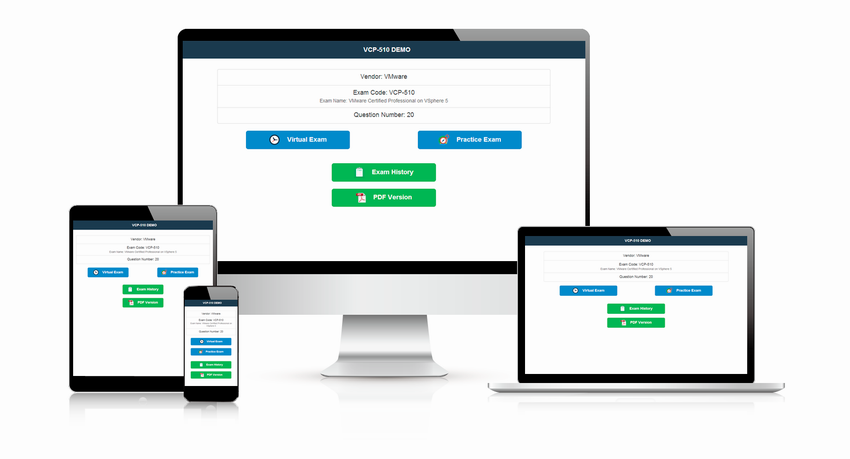
On account that different people have different preference for different versions of JN0-352 exam braindumps: Enterprise Routing and Switching, Specialist (JNCIS-ENT), our company has put out three kinds of different versions for our customers to choose from, namely, PDF Version, PC test engine and APP test engine of Juniper JN0-352 dumps guide. It is universally acknowledged that PDF version is convenient for you to read and print, therefore, you can bring the JN0-352 exam simulation files with you wherever you go. What's more, among the three versions, the PC version can stimulate the real exam for you in the internet, but this version of Juniper JN0-352 exam simulation only can be operated in the windows operation system under Java script, which can help you to become familiar with the exam atmosphere in the real exam. We will respect every select that you make and will spare no effort to provide the best service and JN0-352 exam braindumps: Enterprise Routing and Switching, Specialist (JNCIS-ENT) for you.
Instant Download: Upon successful payment, Our systems will automatically send the product you have purchased to your mailbox by email. (If not received within 12 hours, please contact us. Note: don't forget to check your spam.)
Instant downloading after payment
Customers' satisfaction is our greatest pursuit, so our company has paid great importance to the delivery speed. As our Juniper JN0-352 dumps guide materials are electronic files we do not need traditional shipping method. In order to save as much time as possible for our customers, our system will send the downloading link of JN0-352 exam braindumps: Enterprise Routing and Switching, Specialist (JNCIS-ENT) to your e-mail address in 5 to 10 minutes automatically after payment (please enter the right email while placing the order), then you only need to check your email and download the JN0-352 dumps guide, thus you can get enough time to prepare for the exam, as it is known to all, chance favors the one with a prepared mind. Our Juniper JN0-352 exam simulation files have been highly valued by a large number of people all over the world, you might as well have a try, and experience will tell you everything.
Undoubtly in the process of globalization, competition in various industries is likely to be tougher and tougher, (JN0-352 exam braindumps: Enterprise Routing and Switching, Specialist (JNCIS-ENT)) and the industry is not an exception. As a worker, how can you stand out in the crowd? Maybe this certification can be the most powerful tool for you.

The shortcut for busy workers
However, preparing for the certificate exam is a hard & time-consuming process because the exam is very difficult and the pass rate is low if you prepare yourself without the help of our Juniper JN0-352 dumps guide. However most of people who need to prepare for the exam are office stuff and who are busy & tired in their daily lives, they may not have enough time to prepare for exam without valid JN0-352 exam braindumps: Enterprise Routing and Switching, Specialist (JNCIS-ENT). In order to help candidates get out of the dilemma, we are here to provide the shortcut for you. Our company specializes in compiling the Juniper JN0-352 exam bootcamp for workers, and we will be here waiting for helping you any time.
Juniper JN0-352 Exam Syllabus Topics:
| Section | Objectives |
|---|---|
| Topic 1: IS-IS | - Link-state database and PDUs - Adjacencies and troubleshooting - Levels, areas and metrics |
| Topic 2: Layer 2 Security | - MACsec and storm control - Layer 2 firewall filters - Port security (MAC limiting, DHCP snooping, DAI, IP source guard) - BPDU, loop and root protection |
| Topic 3: Layer 2 Switching and VLANs | - Inter-VLAN routing - Ports and VLAN tagging - Frame processing - Native VLANs and voice VLANs - Bridging components |
| Topic 4: Protocol-Independent Routing | - Martian addresses and RIB groups - Static, aggregate, generated routes - Load balancing and filter-based forwarding |
| Topic 5: High Availability | - Link Aggregation Groups and RTG - Virtual chassis and graceful restart - VRRP, NSR, NSB and BFD |
| Topic 6: OSPF | - Router ID, adjacencies and neighbors - Areas and LSA types - Link-state database and packet types |
| Topic 7: Spanning Tree | - Bridge Protocol Data Units (BPDUs) - STP and RSTP concepts, roles and states - Convergence and reconvergence |
| Topic 8: Tunnels | - IP tunneling concepts - GRE and IP-IP configuration and troubleshooting |
| Topic 9: BGP | - BGP basic operations and message types - Attributes and path selection - EBGP and IBGP peer interactions |
Juniper Enterprise Routing and Switching, Specialist (JNCIS-ENT) Sample Questions:
1. Which statement about aggregate routes is correct?
A) Aggregate routes are automatically generated for all of the subnets in a routing table.
B) Aggregate routes are always preferred over more specific routes, even when the specific routes have a better path.
C) Aggregate routes are used for advertising summarized network prefixes.
D) Aggregate routes can only be used for static routing but not for dynamic routing protocols.
2. What is a purpose of using a spanning tree protocol?
A) to eliminate broadcast storms
B) to route IP packets
C) to look up MAC addresses
D) to tunnel Ethernet frames
3. You are asked to explore adding BGP route reflectors to allow for increased scale in your core network. Which statement is correct in this scenario?
A) Route reflectors require that the network is connected in a physical full mesh.
B) The cluster ID is not required to use route reflectors.
C) Route reflectors are required whenever internal BGP (IBGP) sessions are needed.
D) The cluster ID is required to prevent routing loops.
4. Both the R1 and R2 devices are advertising prefix X into AS 65530 with the BGP attributes shown in the exhibit.
Which statement is correct in this scenario?
A) R1's version of prefix X will be active because of the local preference attribute.
B) R2's version of prefix X will be active because of the AS path attribute.
C) R1's version of prefix X will be active because of the AS path attribute.
D) R2's version of prefix X will be active because of the local preference attribute.
5. Which three statements are correct about OSPF packet types? (Choose three.)
A) Link-state request packets are sent after receiving an LSA header not in the OSPF database.
B) Link-state acknowledgment packets are sent every 30 seconds.
C) Link-state update packets contain one or more LSAs.
D) Database description packets are used during the adjacency formation process.
E) Hello packets are sent every 30 seconds by default.
Solutions:
| Question # 1 Answer: C | Question # 2 Answer: A | Question # 3 Answer: D | Question # 4 Answer: B | Question # 5 Answer: A,C,D |


 Hardy
Hardy 
 Mildred
 Andrew
 Stanley
  Maxwell
  Omar
Omar