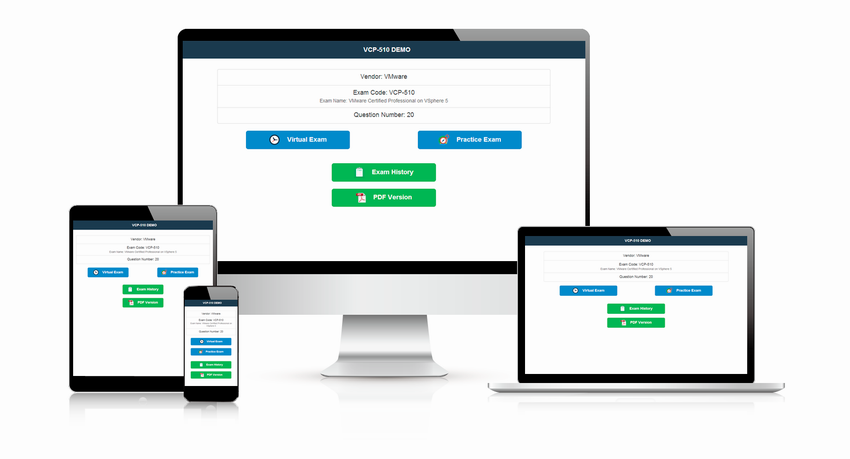
Three different versions available for you
On account that different people have different preference for different versions of 070-486日本語 exam braindumps: Developing ASP.NET MVC 4 Web Applications (070-486日本語版), our company has put out three kinds of different versions for our customers to choose from, namely, PDF Version, PC test engine and APP test engine of Microsoft 070-486日本語 dumps guide. It is universally acknowledged that PDF version is convenient for you to read and print, therefore, you can bring the 070-486日本語 exam simulation files with you wherever you go. What's more, among the three versions, the PC version can stimulate the real exam for you in the internet, but this version of Microsoft 070-486日本語 exam simulation only can be operated in the windows operation system under Java script, which can help you to become familiar with the exam atmosphere in the real exam. We will respect every select that you make and will spare no effort to provide the best service and 070-486日本語 exam braindumps: Developing ASP.NET MVC 4 Web Applications (070-486日本語版) for you.
Instant Download: Upon successful payment, Our systems will automatically send the product you have purchased to your mailbox by email. (If not received within 12 hours, please contact us. Note: don't forget to check your spam.)
Instant downloading after payment
Customers' satisfaction is our greatest pursuit, so our company has paid great importance to the delivery speed. As our Microsoft 070-486日本語 dumps guide materials are electronic files we do not need traditional shipping method. In order to save as much time as possible for our customers, our system will send the downloading link of 070-486日本語 exam braindumps: Developing ASP.NET MVC 4 Web Applications (070-486日本語版) to your e-mail address in 5 to 10 minutes automatically after payment (please enter the right email while placing the order), then you only need to check your email and download the 070-486日本語 dumps guide, thus you can get enough time to prepare for the exam, as it is known to all, chance favors the one with a prepared mind. Our Microsoft 070-486日本語 exam simulation files have been highly valued by a large number of people all over the world, you might as well have a try, and experience will tell you everything.
Undoubtly in the process of globalization, competition in various industries is likely to be tougher and tougher, (070-486日本語 exam braindumps: Developing ASP.NET MVC 4 Web Applications (070-486日本語版)) and the industry is not an exception. As a worker, how can you stand out in the crowd? Maybe this certification can be the most powerful tool for you.

The shortcut for busy workers
However, preparing for the certificate exam is a hard & time-consuming process because the exam is very difficult and the pass rate is low if you prepare yourself without the help of our Microsoft 070-486日本語 dumps guide. However most of people who need to prepare for the exam are office stuff and who are busy & tired in their daily lives, they may not have enough time to prepare for exam without valid 070-486日本語 exam braindumps: Developing ASP.NET MVC 4 Web Applications (070-486日本語版). In order to help candidates get out of the dilemma, we are here to provide the shortcut for you. Our company specializes in compiling the Microsoft 070-486日本語 exam bootcamp for workers, and we will be here waiting for helping you any time.
Microsoft 70-486 Exam Syllabus Topics:
| Topic | Details | Weights |
|---|
| Design and Implement Security | Configure authentication
-Authenticate users; enforce authentication settings; implement ASP.NET Core Identity; enable Facebook, Google and other external providers; implement account confirmation, password recovery, and multi-factor authentication; perform authentication using Azure Active Directory, Azure Active Directory B2C, Azure Active Directory B2B, and Microsoft Identity manage user session by using cookies; acquire access tokens using the Microsoft Authentication Library (MSAL) Configure and apply authorization
-Create roles; authorize roles programmatically; configure and work with custom UserStores using middleware; configure controllers and actions to participate in authorization Design and implement claims-based authentication
-Perform authentication and authorization using tokens including OpenID, OAuth, JWT, SAML, bearer tokens, etc. Manage data integrity
-Apply encryption to application data; apply encryption to the configuration sections of an application; sign application data to prevent tampering; secure data using Azure Key Vault; implement encryption for data protection using the data protection APIs in transit and at rest Implement a secure site
-Secure communication by applying SSL certificates; require SSL for all requests; enable SSL hosting in the development environment; implement SSL using Azure Load Balancers; salt and hash passwords for storage; use HTML encoding to prevent cross-site scripting attacks (ANTI-XSS Library); implement deferred validation and handle unvalidated requests, for example, form, querystring, and URL; prevent SQL injection attacks by parameterizing queries; prevent cross-site request forgeries (XSRF); use Azure Security Center to monitor Azure resources; implement Cross Origin Resource Sharing (CORS); implement protection against open redirect attacks | 15-20% |
| Design the application architecture | Plan the application layers
-Plan data access; plan for separation of concerns, appropriate use of models, views, controllers, components, and service dependency injection; choose between client-side and server-side processing; design for scalability; choose between ASP.NET Core and ASP.NET; choose when to use .NET standard libraries Design a distributed application
-Design a hybrid application; plan for session management in a distributed environment; plan web farms; run Microsoft Azure services on-premises with Azure Pack; enable deferred processing through Azure features including queues, scheduled and on-demand jobs, Azure Functions, and Azure Web Jobs Design and implement the Azure Web Apps life cycle
-Identify and implement Start, Run, and Stop events; code against application events in applications; configure startup tasks, including IIS, app pool configuration, and third-party tools Configure state management
-Choose a state management mechanism including in-process, out of process, and Redis-based state management; plan for scalability; use cookies or local storage to maintain state; apply configuration settings in web.config files; implement sessionless state including query strings; configure middleware to enable session and application state in ASP.NET Core Design a caching strategy
-Implement page output caching and data caching; create cache profiles; implement HTTP caching; implement Azure Redis caching; plan a content delivery network (CDN) strategy, for example, Azure CDN Design and implement a Web Socket strategy
-Read and write string and binary data asynchronously; choose a connection loss strategy; decide when to use Web Sockets; implement SignalR; enable web socket features in an Azure Web App instance Design a configuration management solution
-Manage configuration sources, including XML, JSON, and INI files; manage environment variables; implement Option objects; implement multiple environments using files and hierarchical structure; manage sensitive configuration; react to runtime configuration changes; implement a custom configuration source; secure configuration by using Azure Key Vault; use the Secret Manager tool in development to keep secrets out of your code for configuration values Interact with the host environment
-Work with file system using file providers; work with environment variables; determine hosting environment capabilities; implement native components, including PInvoke and native dependencies for hosts including Linux and Windows; use ASP.NET hosting on an Open Web Interface for .NET (OWIN)-based server Compose an application by using the framework pipeline
-Add custom request processing modules to the pipeline; add, remove, and configure services used in the application; design and implement middleware; design for kestrel, Http.sys web server and IIS; design and implement startup filters | 15-20% |
| Design the User Experience | Create elements of the user interface for a web application
-Create and apply styles by using CSS; structure and lay out the user interface by using HTML; implement dynamic page content based on a design Design and implement UI behavior
-Implement client-side validation; use JavaScript to manipulate the DOM; extend objects by using prototypal inheritance; use AJAX to make partial page updates Design the UI layout of an application
-Implement partial views and view components for reuse in different areas of the application; design and implement pages by using Razor Pages; design and implement layouts to provide visual structure; define and render optional and required page sections; create and use tag and HTML helpers to simplify markup Plan a responsive UI layout
-Plan for applications that run on multiple devices and screen resolutions; use media queries and Bootstrap’s responsive grid; detect browser features and capabilities; create a web application that runs across multiple browsers and mobile devices; enable consistent cross-browser experiences with polyfills Plan mobile UI strategy
-Implement mobile specific UI elements such as touch input, low bandwidth situations, and device oritentation changes; define and implement a strategy for working with mobile browsers | 15-20% |
| Design the build and deployment architecture | Design a browser artifact build strategy
-Design a JavaScript build pipeline using Gulp, Grunt, npm and Bower; design an artifact build strategy using Less, Sass and Font Awesome; design and implement a bundling and minification strategy for browser artifacts, including JavaScript, CSS and images Design a server build strategy
-Manage NuGet dependencies; target runtimes, including the full .NET Framework, .NET core, and .NET standard; manage debug and release configurations, including compilation and optimization options; include or exclude files from build; manage build sources, including content, resources, and shared files; implement metadata for projects, including version, release notes, and descriptions; define other build options, including xmlDoc and warningsAsErrors; work with static files in ASP.NET core Design a publishing strategy
-Implement application publishing using dotnet.exe; manage publishing options in csproj; implement additional tooling; implement pre-publish and post-publish scripts; implement native compilation; publish to Docker container image Implement an Azure deployment strategy
-Deploy Azure Web App using supported deployment models including FTP, Kudu, Web Deploy, and Visual Studio Publishing Wizard; provision ARM- based resources while deploying applications; implement deployment environments, including dev, test, and prod in Azure; use deployment slots for staging sites; deploy to Azure Stack Implement a on-premises deployment strategy
-Deploy application to IIS using Web Deploy, xcopy, and Visual Studio Publishing Wizard; deploy application to Windows Nano Server, deploy application to IIS Hosted Web Core, deploy application to HTTP.sys web server; deploy application to Kestrel on Windows and Linux; implement reverse proxying to Kestrel using IIS and Nginx | 10-15% |
| Develop the User Experience | Plan for search engine optimization and accessibility
-Use analytical tools to parse HTML; provide an xml sitemap and robots.txt file to improve scraping; write semantic markup for accessibility, for example, screen readers; use rich snippets to increase content visibility Plan and implement globalization and localization
-Plan a localization strategy; create and apply resources to UI including JavaScript resources; set cultures; implement server side localization and globalization Design and implement MVC controllers and actions
-Apply authorization attributes, filters including global, authentication, and overriddable filters; choose and implement custom HTTP status codes and responses; implement action results; implement MVC areas; implement Dependency Injection for services in controllers Design and implement routes
-Define a route to handle a URL pattern; apply route constraints; ignore URL patterns; add custom route parameters; define areas; define routes that interoperate with Single Page Application frameworks such as Angular Control application behavior by using MVC extensibility points
-Create custom middleware and inject it into the pipeline; implement MVC filters and controller factories; control application behavior by using action results, model binders, and route handlers; inject services into a view Design and implement serialization and model binding
-Serialize models and data using supported serialization formats, including JSON, XML, protobuf, and WCF/SOAP; implement model and property binding, including custom binding and model validation; implement web socket communication in MVC; implement file uploading and multipart data; use AutoRest to build clients | 15-20% |
| Troubleshoot and Debug Web Applications | Prevent and troubleshoot runtime issues
-Troubleshoot performance, security, and errors; implement tracing, logging, and debugging including IntelliTrace; enable and configure health monitoring including Performance Monitor; configure and use App Insights runtime telemetry Design an exception handling strategy
-Handle exceptions across multiple layers; use MVC middleware to configure error handling; use different exception handling strategies for different environments; create and display custom error pages; configure a custom pipeline for error handling; handle first chance exceptions; configure and use App Insights; log application exceptions Test a web application
-Create and run unit tests, for example, use the Assert class, create mocks and stubs; create and run web tests including using Browser Link; debug a web application in multiple browsers and mobile emulators; use Azure DevTest Labs; use Visual Studio Team Services Debug an Azure application
-Collect diagnostic information by using Azure App Insights; choose log types, for example, event logs, performance counters, and crash dumps; stream logs directly to Visual Studio from a deployed site; debug an Azure application by using Visual Studio and remote debugging; interact directly with remote Azure websites using Server Explorer | 20-25% |
Reference: https://www.microsoft.com/en-us/learning/exam-70-486.aspx