Lpi 101-500 Deutsch : LPIC-1 Exam 101, Part 1 of 2, version 5.0 (101-500 Deutsch Version)

101-500 Deutsch real exams

Exam Code: 101-500-Deutsch

Exam Name: LPIC-1 Exam 101, Part 1 of 2, version 5.0 (101-500 Deutsch Version)

Updated: Jun 03, 2026

Q & A: 299 Questions and Answers

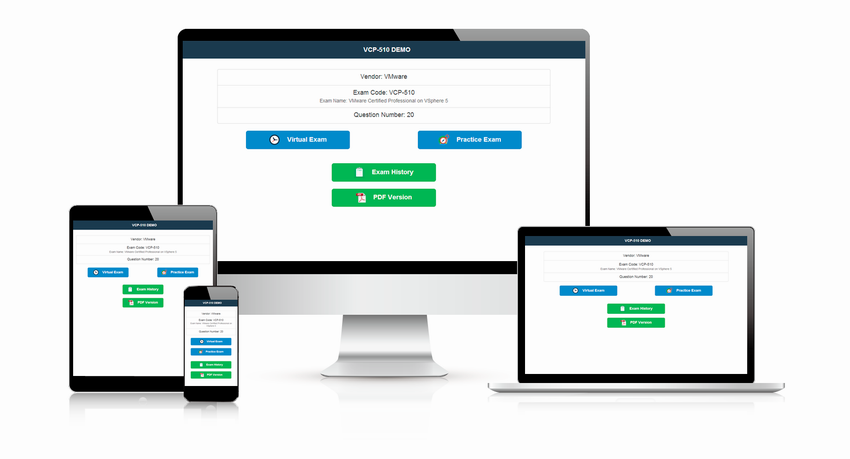
101-500 Deutsch Free Demo download

Already choose to buy "PDF"
Price: $69.99 

About Lpi 101-500 Deutsch Exam

LPI 101-500 Exam Syllabus Topics:

TopicDetails

System Architecture

Determine and configure hardware settings

Weight:2
Description:Candidates should be able to determine and configure fundamental system hardware

Key Knowledge Areas:
-Enable and disable integrated peripherals.
- Differentiate between the various types of mass storage devices.
- Determine hardware resources for devices.
-Tools and utilities to list various hardware information (e.g. lsusb, lspci, etc.).
-Tools and utilities to manipulate USB devices.
-Conceptual understanding of sysfs, udev and dbus.

The following is a partial list of the used files, terms and utilities:
-
/sys/
-/proc/
-/dev/
-modprobe
-lsmod
-lspci
-lsusb

Boot the system

Weight:3
Description:Candidates should be able to guide the system through the booting process.

Key Knowledge Areas:
-
Provide common commands to the boot loader and options to the kernel at boot time.
-Demonstrate knowledge of the boot sequence from BIOS/UEFI to boot completion.
-Understanding of SysVinit and systemd.
-Awareness of Upstart.
-Check boot events in the log files.

The following is a partial list of the used files,terms and utilities:
-dmesg
- journalctl
-BIOS
- UEFI
-bootloader
-kernel
-initramfs
-init
-SysVinit
-systemd

Change runlevels / boot targets and shutdown or reboot system

Weight:3
Description:Candidates should be able to manage the SysVinit runlevel or systemd boot target of the system. This objective includes changing to single user mode, shutdown or rebooting the system. Candidates should be able to alert users before switching runlevels / boot targets and properly terminate processes. This objective also includes setting the default SysVinit runlevel or systemd boot target. It also includes awareness of Upstart as an alternative to SysVinit or systemd.

Key Knowledge Areas:
-
Set the default runlevel or boot target.
-Change between runlevels / boot targets including single user mode.
-Shutdown and reboot from the command line.
-Alert users before switching runlevels / boot targets or other major system events.
-Properly terminate processes.
-Awareness of acpid.

The following is a partial list of the used files,terms and utilities:
-
/etc/inittab
-shutdown
-init
-/etc/init.d/
-telinit
-systemd
-systemctl
-/etc/systemd/
-/usr/lib/systemd/
-wall

Linux Installation and Package Management

Design hard disk layout

Weight:2
Description:Candidates should be able to design a disk partitioning scheme for a Linux system.

Key Knowledge Areas:
- Allocate filesystems and swap space to separate partitions or disks.
-Tailor the design to the intended use of the system.
-Ensure the /boot partition conforms to the hardware architecture requirements for booting.
-Knowledge of basic features of LVM.

The following is a partial list of the used files,terms and utilities:
-
/ (root) filesystem
-/var filesystem
-/home filesystem
-/boot filesystem
-EFI System Partition (ESP)
-swap space
-mount points
-partitions

Install a boot manager

Weight:2
Description:Candidates should be able to select, install and configure a boot manager.

Key Knowledge Areas:
-
Providing alternative boot locations and backup boot options.
-Install and configure a boot loader such as GRUB Legacy.
-Perform basic configuration changes for GRUB 2.
-Interact with the boot loader.

The following is a partial list of the used files, terms and utilities:
-
menu.lst, grub.cfg and grub.conf
-grub-install
-grub-mkconfig
-MBR

Manage shared libraries

Weight:1
Description:Candidates should be able to determine the shared libraries that executable programs depend on and install them when necessary.

Key Knowledge Areas:
-
Identify shared libraries.
-Identify the typical locations of system libraries.
-Load shared libraries.

The following is a partial list of the used files,terms and utilities:
-
ldd
-ldconfig
-/etc/ld.so.conf
-LD_LIBRARY_PATH

Use Debian package management

Weight:3
Description:Candidates should be able to perform package management using the Debian package tools.

Key Knowledge Areas:
-
Install, upgrade and uninstall Debian binary packages.
-Find packages containing specific files or libraries which may or may not be installed.
-Obtain package information like version, content, dependencies, package integrity and installation status (whether or not the package is installed).
- Awareness of apt.

The following is a partial list of the used files,terms and utilities:
-
/etc/apt/sources.list
-dpkg
-dpkg-reconfigure
-apt-get
-apt-cache

Use RPM and YUM package management

Weight:3
Description:Candidates should be able to perform package management usingRPM, YUM and Zypper.

Key Knowledge Areas:
-
Install, re-install, upgrade and remove packages using RPM, YUM and Zypper.
-Obtain information on RPM packages such as version, status, dependencies, integrity and signatures.
-Determine what files a package provides, as well as find which package a specific file comes from.
-Awareness of dnf.

The following is a partial list of the used files,terms and utilities:
-
rpm
-rpm2cpio
-/etc/yum.conf
-/etc/yum.repos.d/
-yum
-zypper

Linux as a virtualization guestWeight: 1
Description: Candidates should understand the implications of virtualization and cloud computing on a Linux guest system.

Key Knowledge Areas:
-Understand the general concept of virtual machines and containers.
-Understand common elements virtual machines in an IaaS cloud, such as computing instances, block storage and networking.
-Understand unique properties of a Linux system which have to changed when a system is cloned or used as a template.
-Understand how system images are used to deploy virtual machines, cloud instances and containers.
-Understand Linux extensions which integrate Linux with a virtualization product.
-Awareness of cloud-init.

The following is a partial list of the used files, terms and utilities:
-Virtual machine
-Linux container
-Application container
-Guest drivers
-SSH host keys
-D-Bus machine id


GNU and Unix Commands

Work on the command line

Weight:4
Description:Candidates should be able to interact with shells and commands using the command line. The objective assumes the Bash shell.

Key Knowledge Areas:
-
Use single shell commands and one line command sequences to perform basic tasks on the command line.
-Use and modify the shell environment including defining, referencing and exporting environment variables.
-Use and edit command history.
-Invoke commands inside and outside the defined path.

The following is a partial list of the used files,terms and utilities:
-
bash
-echo
-env
-export
-pwd
-set
-unset
-type
-which
-man
-uname
-history
-.bash_history
-Quoting

Process text streams using filters

Weight:2
Description:Candidates should be able to apply filters to text streams.

Key Knowledge Areas:
-
Send text files and output streams through text utility filters to modify the output using standard UNIX commands found in the GNU textutils package.

The following is a partial list of the used files, terms and utilities:
-bzcat
-cat
-cut
-head
-less
-md5sum
-nl
-od
-paste
-sed
-sha256sum
-sha512sum
-sort
-split
-tail
-tr
-uniq
-wc
-xzcat
-zcat

Perform basic file management

Weight:4
Description:Candidates should be able to use the basic Linux commands to manage files and directories.

Key Knowledge Areas:
-
Copy, move and remove files and directories individually.
-Copy multiple files and directories recursively.
-Remove files and directories recursively.
-Use simple and advanced wildcard specifications in commands.
-Using find to locate and act on files based on type, size, or time.
-Usage of tar, cpio and dd.

The following is a partial list of the used files, terms and utilities:
-
cp
-find
-mkdir
-mv
-ls
-rm
-rmdir
-touch
-tar
-cpio
-dd
-file
-gzip
-gunzip
-bzip2
-bunzip2
-xz
-unxz
-file globbing

Use streams, pipes and redirects

Weight:4
Description:Candidates should be able to redirect streams and connect them in order to efficiently process textual data. Tasks include redirecting standard input, standard output and standard error, piping the output of one command to the input of another command, using the output of one command as arguments to another command and sending output to both stdout and a file.

Key Knowledge Areas:
-
Redirecting standard input, standard output and standard error.
-Pipe the output of one command to the input of another command.
-Use the output of one command as arguments to another command.
-Send output to both stdout and a file.

The following is a partial list of the used files, terms and utilities:
-
tee
-xargs

Create, monitor and kill processes

Weight:4
Description:Candidates should be able to perform basic process management.

Key Knowledge Areas:
-
Run jobs in the foreground and background.
-Signal a program to continue running after logout.
-Monitor active processes.
-Select and sort processes for display.
-Send signals to processes.

The following is a partial list of the used files, terms and utilities:
-
&
-bg
-fg
-jobs
-kill
-nohup
-ps
-top
-free
-uptime
-pgrep
-pkill
-killall
-watch
-screen
-tmux

Modify process execution priorities

Weight:2
Description:Candidates should should be able to manage process execution priorities.

Key Knowledge Areas:
-
Know the default priority of a job that is created.
-Run a program with higher or lower priority than the default.
-Change the priority of a running process.

The following is a partial list of the used files, terms and utilities:
-
nice
-ps
-renice
-top

Search text files using regular expressions

Weight:2
Description:Candidates should be able to manipulate files and text data using regular expressions. This objective includes creating simple regular expressions containing several notational elements as well as understanding the differences between basic and extended regular expressions. It also includes using regular expression tools to perform searches through a filesystem or file content.

Key Knowledge Areas:
-
Create simple regular expressions containing several notational elements.
-Understand the differences between basic and extended regular expressions.
-Understand the concepts of special characters, character classes, quantifiers and anchors.
-Use regular expression tools to perform searches through a filesystem or file content.
-Use regular expressions to delete, change and substitute text.

The following is a partial list of the used files,terms and utilities:
-
grep
-egrep
-fgrep
-sed
-regex(7)

Basic file editing

Weight:3
Description:Candidates should be able to edit text files using vi. This objective includes vi navigation, vi modes, inserting, editing, deleting, copying and finding text. It also includes awareness of other common editors and setting the default editor.

Key Knowledge Areas:
-
Navigate a document using vi.
-Understand and use vi modes.
-Insert, edit, delete, copy and find text in vi.
-Awareness of Emacs, nano and vim.
-Configure the standard editor.

The following is a partial list of the used files, terms and utilities:
-
vi
-/, ?
-h,j,k,l
-i, o, a
- d, p, y, dd, yy
-ZZ, :w!, :q!
-EDITOR

Devices, Linux Filesystems, Filesystem Hierarchy Standard

Create partitions and filesystems

Weight:2
Description:Candidates should be able to configure disk partitions and then create filesystems on media such as hard disks. This includes the handling of swap partitions.

Key Knowledge Areas:
-
Manage MBR and GPT partition tables
-Use various mkfs commands to create various filesystems such as:
-ext2/ext3/ext4
-XFS
-VFAT
-exFAT
-Basic feature knowledge of Btrfs, including multi-device filesystems, compression and subvolumes.

The following is a partial list of the used files,terms and utilities:
-
fdisk
-gdisk
-parted
-mkfs
-mkswap

Maintain the integrity of filesystems

Weight:2
Description:Candidates should be able to maintain a standard filesystem, as well as the extra data associated with a journaling filesystem.

Key Knowledge Areas:
-
Verify the integrity of filesystems.
-Monitor free space and inodes.
-Repair simple filesystem problems.

The following is a partial list of the used files,terms and utilities:
-
du
-df
-fsck
-e2fsck
-mke2fs
-tune2fs
-xfs_repair
-xfs_fsr
-xfs_db

Control mounting and unmounting of filesystems

Weight:3
Description:Candidates should be able to configure the mounting of a filesystem.

Key Knowledge Areas:
-
Manually mount and unmount filesystems.
-Configure filesystem mounting on bootup.
-Configure user mountable removable filesystems.
-Use of labels and UUIDs for identifying and mounting file systems.
-Awareness of systemd mount units.

The following is a partial list of the used files, terms and utilities:
-/etc/fstab
-/media/
-mount
-umount
-blkid
-lsblk

Manage file permissions and ownership

Weight:3
Description:Candidates should be able to control file access through the proper use of permissions and ownerships.

Key Knowledge Areas:
-
Manage access permissions on regular and special files as well as directories.
-Use access modes such as suid, sgid and the sticky bit to maintain security.
-Know how to change the file creation mask.
-Use the group field to grant file access to group members.

The following is a partial list of the used files, terms and utilities:
-
chmod
-umask
-chown
-chgrp

Create and change hard and symbolic links

Weight:2
Description:Candidates should be able to create and manage hard and symbolic links to a file.

Key Knowledge Areas:
-
Create links.
-Identify hard and/or soft links.
-Copying versus linking files.
-Use links to support system administration tasks.

The following is a partial list of the used files,terms and utilities:
-
ln
-ls

Find system files and place files in the correct location

Weight:2
Description:Candidates should be thoroughly familiar with the Filesystem Hierarchy Standard (FHS), including typical file locations and directory classifications.

Key Knowledge Areas:
-
Understand the correct locations of files under the FHS.
-Find files and commands on a Linux system.
-Know the location and purpose of important file and directories as defined in the FHS.

The following is a partial list of the used files,terms and utilities:
-
find
-locate
- updatedb
​-whereis
-which
-type
-/etc/updatedb.conf

Obviously everyone expects to get a desired job and promotion as well as a big pay raise in his or her career (Lpi 101-500 Deutsch exam braindumps). If you are a worker, maybe the certification will be of great significance for you to achieve your goal. But meanwhile, the Lpi 101-500 Deutsch exam is always "a lion in the way" or "a stumbling block" for many people because it is too difficult for many candidates to pass (101-500 Deutsch exam simulation). Now, since you have clicked into this website, your need not to worry about that any longer, because our company can provide the best remedy for you--our Lpi 101-500 Deutsch reliable questions and answers files.

Our company has been committed to edit the valid 101-500 Deutsch exam simulation for workers during the 8 years, and now we would like to share our great achievements with you in order to help you to pass the exam as well as get the certification easily. The strong points of our 101-500 Deutsch exam braindumps are as follows.

Free Download Lpi 101-500 Deutsch prep pass

Career Path

After completing the LPI 101-500 exam, many candidates choose to continue along the same path by validating their high-level skills relating to Linux management. Here, you will have tons of options that can open doors to open exciting career opportunities with massive potential for professional growth. Find a few such options listed below:

  • The GIAC Certified UNIX Security Administrator (GCUX) certificate;
  • The Red Hat Level Linux certifications including the Red Hat Certified System Administrator (RHCSA), the Red Hat Certified Engineer (RHCE), and the Red Hat Certified Architect (RHCA).
  • The Oracle Linux Administration Paths including the Oracle Certified Associate (OCA) and the Oracle Certified Professional (OCP) qualifications;

Trial experience before purchasing

Our company is the leading position in the field, and our 101-500 Deutsch exam simulation files are well received in most countries of the world, but if you still have any misgivings, you can download the free demo of 101-500 Deutsch reliable questions and answers on the page which will only take you a few minutes, just like an old saying goes: "bold attempt is half success." We believe that the free trial test will let you know why our 101-500 Deutsch exam braindumps are so popular in the world. This is really a great opportunity for you to study efficiently and pass exam easily with Lpi 101-500 Deutsch exam simulation, which will provide you only convenience and benefits. You should not miss it!

Prerequisites and Target Audience

The LPI 101-500 is one of the tests that you must take to qualify for the LPIC-1 certification. The other exam that falls in this category is LPI 102- It's to be noted that there are no formal prerequisites for attempting this LPI 101-500 exam. As a rule, this LPIC-1 certification is the globally accepted model for open source specialists. This makes it a worthy option for the following groups:

  • Any individual looking to attain the LPIC-1 certification.
  • Candidates with a background experience working with Linux Essentials;
  • Linux specialists;

Reference: https://www.lpi.org/our-certifications/lpic-1-overview

Favorable price for the best products

Although our 101-500 Deutsch exam braindumps have received the warm reception and quick sale from all over the world, in order to help as many workers as possible to pass the exam and get the dreaming certification successfully, we still keep a favorable price for our best 101-500 Deutsch exam simulation. We assure you that our products are reasonable price with high quality. If you choose us you will choose the best high pass-rate Lpi 101-500 Deutsch reliable questions and answers. We aim at providing the best training materials for our users, and we will count it an honor to provide sincere service for you.

Instant Download: Upon successful payment, Our systems will automatically send the product you have purchased to your mailbox by email. (If not received within 12 hours, please contact us. Note: don't forget to check your spam.)

High pass rate

The pass rate of IT exam is the most essential criteria to check out whether our 101-500 Deutsch exam simulation files are effective or not undoubtly. Seriously, I want to say that according to statistics, under the help of our products, the pass ratio of 101-500 Deutsch exam braindumps files have reached as high as 98% to 100% based on the past experience. We are growing larger and larger because our valid 101-500 Deutsch reliable questions and answers are the fruits of painstaking efforts of a large number of top workers all over the world. Our Lpi 101-500 Deutsch exam simulation files have been honored as the best shortcut for workers in this filed since all of the contents of 101-500 Deutsch exam braindumps files are the essences of the exam. What's more, all of the key points and the real question types of the exam are included in our exam preparation materials. With the help of our 101-500 Deutsch reliable questions and answers you can be confident that you will pass the exam surely and get your dreaming certification as easy as turning over your hands. So why are you still waiting for? Just take immediate actions!

What Clients Say About Us

LEAVE A REPLY

Your email address will not be published. Required fields are marked *

Why Choose Prep4pass

Quality and Value

Prep4pass Practice Exams are written to the highest standards of technical accuracy, using only certified subject matter experts and published authors for development - no all study materials.

Tested and Approved

We are committed to the process of vendor and third party approvals. We believe professionals and executives alike deserve the confidence of quality coverage these authorizations provide.

Easy to Pass

If you prepare for the exams using our Prep4pass testing engine, It is easy to succeed for all certifications in the first attempt. You don't have to deal with all dumps or any free torrent / rapidshare all stuff.

Try Before Buy

Prep4pass offers free demo of each product. You can check out the interface, question quality and usability of our practice exams before you decide to buy.

Our Clients

bofa
timewarner
vodafone
amazon
charter
verizon
xfinity
earthlink
marriot
centurylink
comcast